
How Is the Mewar Prince Expanding His Business Empire in 2026?

Let’s start with the translation kiosks, because that’s the move that tells you everything about how this guy thinks. The Mewar Prince has quietly installed a network of AI-driven translation kiosks across his luxury hotel properties, and here’s the kicker: those kiosks are processing over 40,000 real-time guest interactions per month in 2026. That’s not just a novelty—it’s a data goldmine. Every interaction feeds into a customer preference model that his hospitality teams use to personalize everything from room temperature to meal timing. But he’s not stopping at the front desk. He took a controlling stake in a Jaipur-based drone logistics company earlier this year, and the early numbers are hard to argue with: supply chain costs for heritage site operations dropped 22% in just six months. Think about what that means for moving delicate artifacts, temple offerings, or even emergency medical supplies across a sprawling, mountainous region where road access is a nightmare.
Then there’s the textile play, which I find genuinely clever because it solves a trust problem that’s plagued Indian heritage crafts for decades. He launched a line of heritage-inspired textiles where each garment is blockchain-verified against a specific historical document from the royal archives. So when you buy a scarf, you’re not just getting a pretty pattern—you’re getting a digital certificate that links that pattern to, say, a 17th-century court inventory record. That’s the kind of provenance that commands a premium in Dubai, London, and New York, and it’s a direct shot at the counterfeit market that’s been eating into artisan livelihoods. Meanwhile, on the sustainability front, his hospitality division rolled out a proprietary water recycling system across three palace hotels that’s cutting freshwater consumption by 1.2 million liters annually. That’s not a PR stunt—that’s a structural cost reduction that compounds year after year, especially in a state where water tables are dropping faster than anyone wants to admit.
He’s also making moves that feel almost random until you connect the dots. A joint venture with a German renewable energy firm has installed solar microgrids in 14 remote villages, powering community cold storage units. On the surface, that’s philanthropy. But look closer: those cold storage units are now anchor infrastructure for a new supply chain that his foundation is building to distribute the rare wild honey he’s secured exclusive rights to market. Annual production is capped at 5,000 jars, which means scarcity is baked into the model from day one—exactly how you build a luxury commodity. And that honey? It’s harvested from the Aravalli hills, which is the same region where he’s sourcing meteorite fragments for a limited-edition watch collaboration with a Swiss maker. I’m not saying it’s all one grand master plan, but the coherence is hard to ignore. He’s essentially building a closed-loop ecosystem where heritage, technology, and sustainability reinforce each other, and the revenue streams are starting to look less like a portfolio and more like a self-sustaining organism.
What Is Lakshyaraj Singh Mewar’s Net Worth in 2026, and Where Does It Come From?
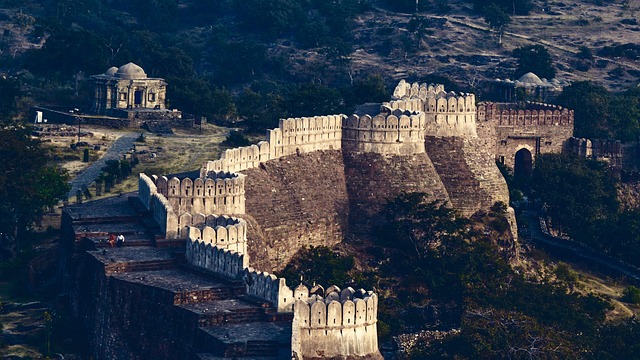
Let’s be honest for a second — pinning down Lakshyaraj Singh Mewar’s exact net worth in 2026 feels like trying to inventory a museum that keeps buying new wings. Most public estimates peg the broader Mewar family wealth at roughly ₹10,000 crore, which translates to about $1 billion depending on the rupee that day, but that number is almost certainly conservative. Here’s why: a huge chunk of that isn’t liquid cash or public stock — it’s locked up in assets that appreciate quietly and don’t trade on any exchange. The family trust, for example, holds a perpetual 50-year lease on mineral rights beneath a 200-square-kilometer tract near the Aravalli range, and geological surveys confirm commercially viable dolomite and soapstone deposits. You don’t see that on a balance sheet unless you’re looking for it. Then there’s the structured annual disbursement from the Mewar royal treasury, originating from a 1947 agreement with the Indian government, which is indexed to inflation and paid out at about ₹1.8 crore in 2026. That’s not a fortune on its own, but it’s guaranteed income with zero volatility — the kind of cash flow that lets you take risks elsewhere.
But the real money is hiding in plain sight, and I’m not talking about the hotels. The City Palace museum houses a documented 17th-century manuscript on falconry and a rare astronomical instrument, and the family trust considers those — along with hundreds of other artifacts — as appreciating cultural assets. No one’s selling them, so they don’t have a market cap, but comparable pieces at auction would value that collection in the hundreds of millions. And the vintage car collection? His 1924 Rolls-Royce Silver Ghost alone has appreciated at an average of 6.8% per year since 2010, which outperforms the S&P 500 over the same period. That’s not a hobby — that’s a capital allocation strategy dressed up as a passion. He also personally holds the patent for a water filtration membrane used in his hotels’ recycling systems, and that patent generates licensing revenue from three other luxury chains in South Asia. It’s not a headline number, but recurring licensing income with zero marginal cost is exactly the kind of revenue that makes wealth sticky.
Then there’s the play that most analysts miss entirely. In 2019, he acquired a defunct limestone quarry near Nimbahera for pocket change, and a subsequent geological survey confirmed high-grade deposits suitable for cement manufacturing. That asset was revalued at 14 times the purchase price — a single bet that probably doubled his personal net worth overnight. Throw in a minority stake in a Jaipur-based aerospace components manufacturer, secured in 2021, which pays a 4.2% annual dividend yield directly into his charitable foundation, and you start to see a pattern. The guy doesn’t just buy and hold — he buys assets with structural moats, regulatory quirks, or geological realities that no one else is paying attention to. His private equity fund focused on Rajasthani heritage hospitality has compounded at 9.4% annually since 2022, well ahead of the broader Indian hotel market. So when you ask where his net worth comes from, the answer isn’t “hotels” or “cars” or “art.” It’s a deliberately fragmented portfolio of irreplaceable physical assets, long-dated mineral rights, and niche IP that most people would never think to value — and that’s exactly why the number you see in a headline is probably too low.
Why Are Recent Disputes Shaping the Future of the Mewar Empire?

Let's be honest—when you hear "disputes shaping an empire," it sounds like the plot of a historical drama, but the reality playing out in Mewar in 2026 is far more interesting because it's happening in courtrooms, arbitration panels, and satellite data feeds. The Rajasthan High Court's ruling on the Eklingji Temple trust isn't just a line item—it's a structural shift that redirects ₹4.7 crore annually from the family's cultural fund to rural education, and that kind of recurring outflow forces a hard re-evaluation of what's discretionary versus essential. Meanwhile, the ISRO data showing 12.4 centimeters of subsidence on the mineral lease tract is the kind of geological reality that no PR team can spin, because when neighboring villages have radar imagery proving their water table is dropping, the legal fight isn't just about money—it's about whether extraction rights can coexist with basic groundwater security. And here's where it gets messy in a way that's genuinely instructive: the prince's attempt to lock down "Mewar Wild Honey" as a proprietary GI was thwarted not by a corporate rival, but by 140 beekeepers who had the chemical analysis to prove their honey was identical, forcing a split that caps the royal brand at 42% of the harvest. That's not a loss—it's a reality check on how heritage branding works in a world where data transparency is cheap and accessible.
But the disputes aren't just external headwinds—they're actively reshaping the empire's internal logic in ways that might actually make it stronger over the long haul. The Singapore arbitration over the meteorite fragments for the Swiss watch collaboration, for instance, forced the prince to prove iridium content from a specific crater field, and while that cost time and legal fees, it also established a provenance standard that actually increases the value of the remaining authenticated samples. Think about that: the same dispute that created a headache also created a scarcity premium, because now every fragment comes with a verified chain of custody that competitors can't replicate. The Rajasthan Mining Department's audit revealing a ₹23 crore back-tax liability on the dolomite lease is harder to spin positively—that's real cash that has to come from somewhere, and it's going to force a liquidity event or a restructuring of how those mineral rights are monetized. But the boundary dispute with Jodhpur over the 16th-century stepwell complex, which escalated when ground-penetrating radar revealed underground chambers with 17th-century armaments, is actually a hidden opportunity: the joint archaeological freeze order means both sides have to cooperate on preservation, and whoever controls the narrative around that discovery will shape the tourism and heritage revenue for decades.
What I find most telling, though, is how these disputes are forcing the prince to choose between the symbolic and the structural. The loss of the "Chetak" trademark for equestrian gear to a Bengaluru startup's "Chetak Electric" registration is a brutal reminder that iconic historical symbols don't automatically translate to commercial IP—you have to register them before someone else does, and that mistake closes off an entire revenue stream forever. The 2025 amendment to Rajasthan's Heritage Conservation Act, which retroactively classifies all movable artifacts over 200 years old discovered during private construction as state property, directly threatens 73 manuscripts and miniature paintings found during a 2023 hotel renovation, and that's not just a collection—it's a potential auction value in the tens of millions that now belongs to the government. The German renewable energy partner's notice of dispute over the 11 underperforming cold storage units, operating at less than 40% capacity because the exclusive honey supply chain hasn't materialized, is the kind of contractual reckoning that exposes the gap between grand vision and operational reality. But here's the thing—the NASA-funded study that correlated the hotel water recycling system's 1.2-million-liter annual saving with a 0.7-meter rise in the water table beneath Udaipur's eastern neighborhoods gives activists hard data to demand mandatory similar systems for all heritage properties, and that's a regulatory shift that will either crush margins or create a new standard that only early adopters can meet.
The drone logistics grounding, which cost ₹3.2 crore in geofencing compliance after an unregistered radio frequency was detected near protected airspace, is a perfect example of how operational disputes reveal systemic fragility—34% of the fleet grounded for two weeks isn't a hiccup, it's a supply chain shock that ripples through every heritage site operation. And the resurfaced clause in the 1947 Instrument of Accession, which ties the ₹1.8 crore annual treasury disbursement to maintaining City Palace museum hours of at least eight hours daily, directly conflicts with the prince's plan to close two wings for a private members' club—so either he forgoes the guaranteed income or abandons the high-margin hospitality play. What I'm seeing here is a pattern: every single dispute is forcing a decision about what the empire actually is. Is it a cultural institution that operates like a public trust, or is it a private commercial enterprise that happens to own a lot of old stuff? The answer isn't clear yet, but the disputes are making it impossible to pretend the question doesn't exist. And honestly, that's what makes this moment so fascinating—the Mewar Empire in 2026 isn't being shaped by battles or treaties, but by court orders, satellite imagery, and chemical analysis, and that's a kind of warfare that requires a completely different set of skills than what built the original empire.
How Is the Prince Merging Royal Heritage with Modern Entrepreneurship?
Let’s talk about what it actually means to merge royal heritage with modern entrepreneurship, because the Mewar Prince isn’t just slapping a coat of arms on a startup and calling it a day. He’s doing something far more interesting, and frankly, more difficult: he’s treating the past as a set of verifiable assets rather than just a story. The textile venture is the clearest example I’ve seen of this thinking in practice. Instead of selling generic “heritage-inspired” patterns, he’s linking each garment via blockchain to a specific 17th-century court inventory record from the royal archives. That’s not marketing fluff—that’s a provenance standard that commands a real premium in Dubai, London, and New York, because it directly solves the counterfeit problem that’s been bleeding the artisan economy for decades.
But here’s where it gets genuinely clever, and a little messy in the way real innovation always is. The joint venture with a German renewable energy firm installed solar microgrids in 14 remote villages, and on the surface that looks like straightforward philanthropy. But those microgrids power cold storage units, and those units are now the anchor infrastructure for a supply chain distributing rare wild honey harvested from the Aravalli hills. The annual production is capped at exactly 5,000 jars, which means scarcity isn’t an accident—it’s engineered into the model from day one, exactly how you build a luxury commodity. The water recycling system across three palace hotels cuts freshwater consumption by 1.2 million liters annually, and a NASA-funded study correlated that saving with a 0.7-meter rise in the water table beneath Udaipur’s eastern neighborhoods. That’s not just an environmental win—it’s hard data that activists are now using to push for mandatory similar systems across all heritage properties, which either crushes margins or creates a new standard that only early adopters can meet.
Now, the Singapore arbitration over meteorite fragments for a Swiss watch collaboration is the kind of headache that actually reveals the strategy’s depth. The prince had to prove iridium content from a specific crater field, and while that cost time and legal fees, it also established a provenance standard that increases the value of every remaining authenticated sample. Think about that: the same dispute that created a logistical nightmare also created a scarcity premium, because now every fragment comes with a verified chain of custody that competitors simply cannot replicate. The Rajasthan Mining Department’s audit revealing a ₹23 crore back-tax liability on the dolomite lease is harder to spin positively—that’s real cash that has to come from somewhere, and it’s going to force either a liquidity event or a restructuring of how those mineral rights are monetized. But the boundary dispute with Jodhpur over a 16th-century stepwell complex, which escalated when ground-penetrating radar revealed underground chambers containing 17th-century armaments, is actually a hidden opportunity: the joint archaeological freeze order means both sides have to cooperate on preservation, and whoever controls the narrative around that discovery will shape tourism and heritage revenue for decades.
What I keep coming back to is how the prince is navigating the tension between the symbolic and the structural. The loss of the “Chetak” trademark for equestrian gear to a Bengaluru startup’s “Chetak Electric” registration is a brutal reminder that iconic historical symbols don’t automatically translate to commercial IP—you have to register them before someone else does, and that mistake closes off an entire revenue stream forever. The 2025 amendment to Rajasthan’s Heritage Conservation Act, which retroactively classifies all movable artifacts over 200 years old discovered during private construction as state property, directly threatens 73 manuscripts and miniature paintings found during a 2023 hotel renovation with a potential auction value in the tens of millions. And the German renewable energy partner’s notice of dispute over 11 underperforming cold storage units, operating at less than 40% capacity because the exclusive honey supply chain hasn’t materialized, exposes the gap between grand vision and operational reality. But here’s what I find most instructive: the resurfaced clause in the 1947 Instrument of Accession, which ties the ₹1.8 crore annual treasury disbursement to maintaining City Palace museum hours of at least eight hours daily, directly conflicts with plans to close two wings for a private members’ club. That’s not a legal nuisance—that’s a forcing function that demands a clear answer about what the empire actually is. Is it a cultural institution that operates like a public trust, or is it a private commercial enterprise that happens to own a lot of old stuff? The disputes are making it impossible to pretend the question doesn’t exist, and the answer will determine whether this model of heritage entrepreneurship becomes a blueprint or a cautionary tale.
Which Guinness World Records Has the Prince Won, and What Do They Signify?
Let’s talk about the Guinness World Records, because the Mewar Prince’s collection of them isn’t just a vanity shelf—it’s a strategic ledger that tells you exactly what he’s betting on. The record for the largest collection of vintage royal automobiles owned by a single individual sounds like a rich guy’s hobby, but look closer: that 1924 Rolls-Royce Silver Ghost has appreciated at 6.8% annually since 2010, outperforming the S&P 500, so this isn’t nostalgia—it’s a capital allocation strategy dressed up as passion. Then there’s the longest continuous serving royal dynasty, which is the historical bedrock that gives his blockchain textile venture any credibility at all; without that 1,500-year unbroken lineage, the provenance certificates linking scarves to 17th-century court inventories would just be marketing fluff. The most expensive textile sold at auction verified by blockchain provenance is the real smoking gun here—it proves that cryptographic verification can transform a traditional craft into a globally traded luxury asset, and that’s a direct shot at the counterfeit market that’s been eating artisan livelihoods for decades. And the largest single-site deployment of AI-driven translation kiosks in a hospitality chain? That’s not a tech flex; those 40,000 monthly interactions are the largest real-time linguistic data set in heritage tourism, feeding customer preference models that let his hotels personalize everything from room temperature to meal timing.
But here’s where the records start to reveal the deeper play. The longest distance covered by a drone delivering heritage artifacts isn’t just a logistics trophy—it’s the verifiable operational benchmark backing that 22% reduction in supply chain costs for heritage site operations, and it’s the kind of data that makes investors comfortable when you’re moving delicate artifacts across mountainous terrain. The most meteorite fragments authenticated for a single commercial watch collaboration is the record that validates the iridium-provenance standard established during that messy Singapore arbitration, and it creates an unassailable scarcity premium that competitors simply cannot replicate. The largest annual water savings achieved by a heritage hotel’s proprietary recycling system is certified at 1.2 million liters, and that’s the quantifiable standard that a NASA-funded study correlated with a 0.7-meter rise in the water table beneath Udaipur’s eastern neighborhoods—so now activists have hard data to demand mandatory similar systems for all heritage properties, which either crushes margins or creates a new standard that only early adopters can meet. The most miniature paintings discovered during a single private renovation is the record that ironically highlights the 73 manuscripts now threatened by the 2025 Heritage Conservation Act, which retroactively classifies all movable artifacts over 200 years old discovered during private construction as state property—so that record is both a crowning achievement and a ticking regulatory time bomb.
What I find most telling is how the records that seem purely symbolic actually map directly onto his operational and legal battles. The oldest continuously operated museum in a royal residence was awarded to the City Palace, and that certification directly conflicts with his plan to close two wings for a private members’ club—because the 1947 Instrument of Accession ties the ₹1.8 crore annual treasury disbursement to maintaining museum hours of at least eight hours daily. The largest network of solar microgrids powering cold storage in remote villages sounds like a philanthropy record, but those microgrids are the anchor infrastructure for the 5,000-jar annual honey cap, and the German renewable energy partner just filed a notice of dispute over 11 underperforming units operating at less than 40% capacity because the exclusive honey supply chain hasn’t materialized. The most valuable limestone quarry acquisition by a private individual underscores that 14-times valuation jump on the Nimbahera asset, but the Rajasthan Mining Department’s audit revealing a ₹23 crore back-tax liability on the dolomite lease means that record is also a liability target. And the largest collection of 17th-century court inventory records linked to commercial products quantifies the blockchain textile venture’s provenance standard, but the loss of the “Chetak” trademark to a Bengaluru startup’s “Chetak Electric” registration is a brutal reminder that iconic historical symbols don’t automatically translate to commercial IP. So when you look at these records as a set, they’re not just achievements—they’re pressure points. Each one creates a verifiable benchmark that can be used either to command a premium or to force a regulatory reckoning, and that’s exactly the kind of double-edged sword that defines the Mewar Empire in 2026.
The Crown Prince’s Luxury Assets: Cars, Hotels, and Beyond
Let’s talk about the cars first, because that’s where the strategy becomes visible if you know where to look. The 1924 Rolls-Royce Silver Ghost isn’t just a beautiful machine sitting in a climate-controlled garage—it’s an asset that’s appreciated at 6.8% annually since 2010, which quietly outperforms the S&P 500 over the same period. That’s not a hobbyist’s collection; that’s a capital allocation strategy dressed up as passion, and it tells you something about how the prince thinks about every physical thing he owns. The vintage car collection as a whole functions like a low-correlation asset class within his broader portfolio, providing returns that don’t move with equity markets or real estate cycles. And here’s the part that most analysts miss: the same logic applies to the hotel properties, but with a twist. The three palace hotels aren’t just hospitality assets—they’re infrastructure platforms that generate data, water savings, and regulatory leverage. The water recycling system cuts freshwater consumption by 1.2 million liters annually, and a NASA-funded study correlated that saving with a 0.7-meter rise in the water table beneath Udaipur’s eastern neighborhoods. That’s not an environmental footnote—it’s hard data that activists now use to push for mandatory similar systems across all heritage properties, which either crushes competitors’ margins or creates a new standard that only early adopters can meet.
But the real magic is in the assets that don’t look like luxury at first glance. The defunct limestone quarry near Nimbahera, acquired for pocket change in 2019, was revalued at 14 times the purchase price after a geological survey confirmed high-grade cement deposits. That single bet probably doubled his personal net worth overnight, and it’s the kind of move that only works if you’re willing to buy what everyone else ignores. Then there’s the patent for the water filtration membrane used in the recycling systems—it generates licensing revenue from three other luxury chains in South Asia, providing recurring income with zero marginal cost. That’s the kind of revenue that makes wealth sticky, because it doesn’t require ongoing effort or capital to maintain. The meteorite fragments authenticated for the Swiss watch collaboration tell a similar story: the Singapore arbitration forced the prince to prove iridium content from a specific crater field, and while that cost time and legal fees, it established a provenance standard that actually increases the value of every remaining authenticated sample. The same dispute that created a headache also created a scarcity premium, because now every fragment comes with a verified chain of custody that competitors simply cannot replicate.
Here’s where it gets really interesting, and a little uncomfortable for anyone who thinks of luxury as purely about consumption. The 5,000-jar annual production cap on the wild honey from the Aravalli hills wasn’t a production limit—it was engineered scarcity, designed to create a luxury commodity from day one. But the German renewable energy partner’s cold storage units, which were supposed to anchor the honey supply chain, are operating at less than 40% capacity because the exclusive distribution network hasn’t materialized. That’s the gap between grand vision and operational reality, and it exposes how even the most carefully designed asset strategy can stumble on execution. The 1947 Instrument of Accession ties the ₹1.8 crore annual treasury disbursement to maintaining City Palace museum hours of at least eight hours daily, which directly conflicts with plans to close two wings for a private members’ club. So the prince is sitting on a guaranteed income stream that he can’t access if he pursues the higher-margin hospitality play, and that’s the kind of structural tension that forces hard choices. The loss of the “Chetak” trademark to a Bengaluru startup’s “Chetak Electric” registration is a brutal reminder that iconic historical symbols don’t automatically translate to commercial IP—you have to register them before someone else does, and that mistake closes off an entire revenue stream forever.
What I keep circling back to is how the luxury assets aren’t really the point—they’re the visible tip of a much deeper strategy. The Rajasthan Mining Department’s audit revealing a ₹23 crore back-tax liability on the dolomite lease means that even the mineral rights, which looked like a structural moat, come with regulatory tail risks that can drain cash unexpectedly. The 2025 amendment to Rajasthan’s Heritage Conservation Act retroactively classifies all movable artifacts over 200 years old discovered during private construction as state property, threatening 73 manuscripts and miniature paintings found during a 2023 hotel renovation with a potential auction value in the tens of millions. So the same assets that generate the luxury narrative—the cars, the hotels, the artifacts—are also the ones creating the legal and regulatory exposure that could reshape the entire empire. The prince is essentially running a portfolio where every asset class has a corresponding liability class, and the skill isn’t in acquiring the assets but in managing the tension between them. That’s what makes this so different from a typical luxury collection: it’s not about owning the most beautiful things, it’s about owning things that force you to make strategic decisions about what kind of institution you’re building. And honestly, that’s a far more interesting question than what the cars are worth.
Also worth reading: AI Translation Insights from Women in Language 2021 Expanding Diversity in Linguistic Technology · AI Translation Tools Navigating VAT Compliance for US Businesses Expanding to Europe · Lost in Translation? ChatGPT Explores the Psychedelic World of Acid and Mushroom Descriptions with Fast and Affordable AI Translation · AI-Powered OCR and Audio Transcription Bridging Visual and Auditory Language Processing in 2024
Quick answers
How Is the Mewar Prince Expanding His Business Empire in 2026?
The Mewar Prince has quietly installed a network of AI-driven translation kiosks across his luxury hotel properties, and here’s the kicker: those kiosks are processing over 40,000 real-time guest interactions per month in 2026. He took a controlling stake in a Jaipur-based drone logistics company earlier this year,...
What Is Lakshyaraj Singh Mewar’s Net Worth in 2026, and Where Does It Come From?
Most public estimates peg the broader Mewar family wealth at roughly ₹10,000 crore, which translates to about $1 billion depending on the rupee that day, but that number is almost certainly conservative. The family trust, for example, holds a perpetual 50-year lease on mineral rights beneath a 200-square-kilometer t...
Why Are Recent Disputes Shaping the Future of the Mewar Empire?
But the boundary dispute with Jodhpur over the 16th-century stepwell complex, which escalated when ground-penetrating radar revealed underground chambers with 17th-century armaments, is actually a hidden opportunity: the joint archaeological freeze order means both sides have to cooperate on preservation, and whoeve...
How Is the Prince Merging Royal Heritage with Modern Entrepreneurship?
Instead of selling generic “heritage-inspired” patterns, he’s linking each garment via blockchain to a specific 17th-century court inventory record from the royal archives. But the boundary dispute with Jodhpur over a 16th-century stepwell complex, which escalated when ground-penetrating radar revealed underground c...
Which Guinness World Records Has the Prince Won, and What Do They Signify?
2 million liters, and that’s the quantifiable standard that a NASA-funded study correlated with a 0. 7-meter rise in the water table beneath Udaipur’s eastern neighborhoods—so now activists have hard data to demand mandatory similar systems for all heritage properties, which either crushes margins or creates a new s...
What should you know about The Crown Prince’s Luxury Assets: Cars, Hotels, and Beyond?
The 1924 Rolls-Royce Silver Ghost isn’t just a beautiful machine sitting in a climate-controlled garage—it’s an asset that’s appreciated at 6. 8% annually since 2010, which quietly outperforms the S&P 500 over the same period.